
Threads Algorithm Explained: How It Works & Tips to Get More Reach (2026)
2026-03-12
Every creator on Threads asks the same question: why do some posts get thousands of views while others barely get seen? The answer is the algorithm — and understanding how it works is the single biggest advantage you can have as a creator.
This guide breaks down everything we know about how the Threads algorithm works in 2026, what signals it prioritizes, and how to create content that the algorithm actually wants to distribute.
How the Threads Algorithm Works
Threads uses two main feeds:
The "For You" Feed
This is the algorithmic feed — and where most discovery happens. Content is ranked based on predicted engagement, relevance to the viewer, and content quality signals. This is where your posts can reach people who don't follow you yet.
The "Following" Feed
This shows content only from accounts a user follows, in roughly reverse-chronological order. It still uses some ranking signals (you won't see every post from every account you follow), but it prioritizes recency.
The key insight: To grow, you need to appear in the "For You" feed. To retain followers, you need to perform well in the "Following" feed. Both require understanding what the algorithm values.
The 7 Key Ranking Signals
Based on observed patterns, platform documentation, and creator experiments, here are the signals that matter most:
1. Engagement Velocity
How quickly your post gets engagement after publishing is the single strongest signal. A post that gets 20 replies in the first 30 minutes will massively outperform a post that gets 20 replies spread over 24 hours.
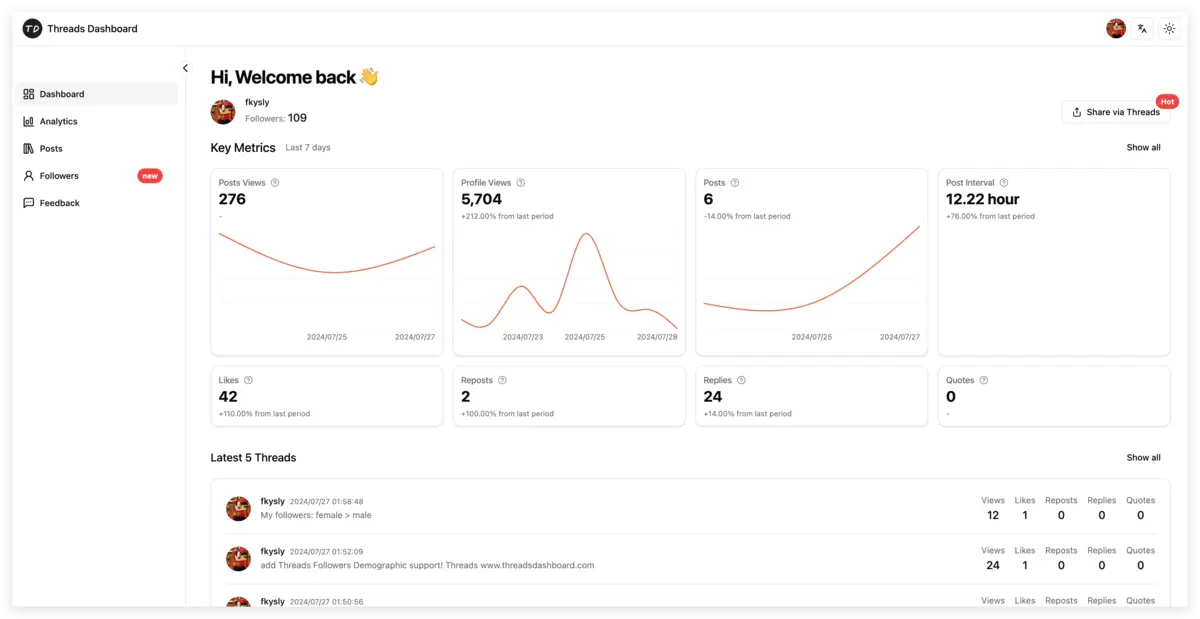
This is why posting time matters so much — you want to publish when your audience is most active to maximize early engagement. Tools like ThreadsDashboard can show you exactly when your followers are online and which posting times historically generate the most engagement.
2. Reply Depth
Not all engagement is equal. The algorithm heavily weights replies — especially conversation threads where multiple people are going back and forth. A post with 10 replies that turn into 30-message conversations signals much higher quality than a post with 50 likes and zero replies.
3. Content Originality
Threads actively deprioritizes:
- Reposted content without added value
- Content that closely matches something already circulating
- Aggregated content copied from other platforms
Original thoughts, unique perspectives, and first-person experiences get boosted.
4. Account Authority
Accounts with consistent posting history, genuine follower engagement, and low spam signals get a ranking boost. This is sometimes called "creator reputation" — the algorithm trusts accounts that have proven they create content people want to see.
Building authority takes time but compounds. An account that has posted valuable content consistently for 6 months will get more reach per post than a brand new account posting the exact same content.
5. Content Relevance
The algorithm matches content to users based on:
- Topics the viewer has engaged with before
- Accounts similar to ones the viewer follows
- Content similar to posts the viewer has liked or replied to
This means niche content often outperforms generic content — it gets shown to a smaller but much more relevant audience, which generates higher engagement rates.
6. Content Format Signals
Different formats signal different intent:
- Text posts: Good for opinions, questions, and quick tips
- Images: Higher stopping power in the feed, good for data/infographics
- Carousels: Strong completion rate signals value
- Video: High watch time signals engagement
The algorithm doesn't inherently prefer one format — it measures how users respond to each format from your specific account.
7. Timeliness
Fresh content gets a natural boost. The algorithm prefers showing users recent content over older posts, all else being equal. This means a good post published at the wrong time might underperform a decent post published at the perfect time.
What Gets Your Content Suppressed
Understanding what the algorithm penalizes is just as important as knowing what it rewards:
Engagement Bait
Posts that explicitly ask for engagement ("Like if you agree", "Share this post", "Follow for more") get flagged and deprioritized. The algorithm can detect these patterns.
External Links in Posts
Posts with external links consistently get less reach than native content. If you need to share a link, put it in a reply to your own post — not in the main post.
Rapid-Fire Posting
Publishing multiple posts within a short window (e.g., 5 posts in an hour) can trigger throttling. Space your content out by at least 2-3 hours.
Controversial or Divisive Content
Threads actively reduces distribution of political content and content that generates angry reactions rather than productive conversation. This is a deliberate platform design choice.
Duplicate Content
Posting the same content across multiple accounts or reposting your own content verbatim will get penalized.
How to Work With the Algorithm
Optimize Your Posting Schedule
The algorithm rewards early engagement, which means posting when your audience is most active is critical. Don't rely on generic "best times to post" advice — your audience is unique.
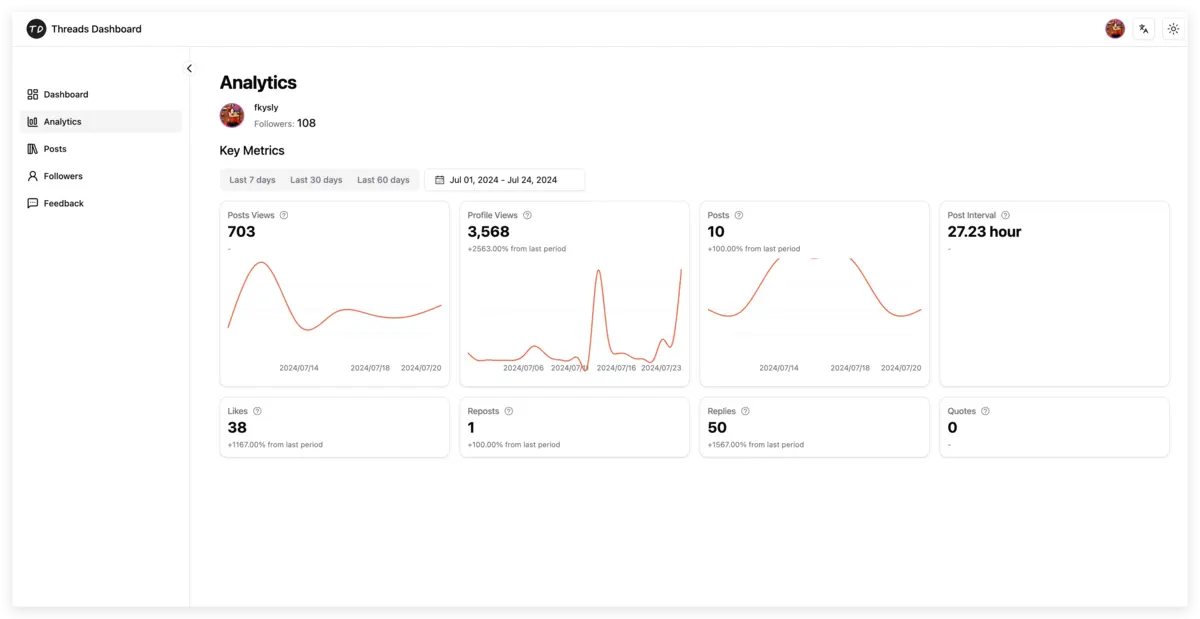
Use ThreadsDashboard to analyze your historical post performance and identify the specific days and times when your content gets the most engagement. This data-driven approach consistently outperforms guesswork.
Write for Replies, Not Likes
Since reply depth is one of the strongest signals, optimize your content for conversation:
- End posts with genuine questions
- Share opinions that invite respectful disagreement
- Post about topics your audience has strong feelings about
- Tell stories that prompt people to share their own experiences
Build Engagement Momentum
The first 30 minutes after posting determine your post's trajectory. To maximize early engagement:
- Post when your audience is active (use analytics data)
- Engage with other accounts for 10-15 minutes before posting
- Reply to every early comment quickly
- Share the post to your Instagram Stories
Create Content Series
Recurring content series build anticipation and train the algorithm to understand your content patterns. Examples:
- "Monday Myth Busters"
- "Weekly Data Drops" (share interesting data from your niche)
- "Friday Unpopular Opinions"
When followers consistently engage with a series, the algorithm learns to prioritize showing them your next installment.
Diversify Your Content Mix
Don't post the same type of content every time. The algorithm rewards accounts that use multiple formats and topics. A good weekly mix might be:
- 3-4 text opinion/tip posts
- 1-2 image or carousel posts
- 1 personal story or behind-the-scenes
- 1-2 conversation starters (questions, polls)
Tracking Your Algorithm Performance
You can't improve what you don't measure. Key metrics to track weekly:
| Metric | What It Tells You | Target | | --------------- | ---------------------------------------------- | ------------------------ | | Reach per post | How far the algorithm distributes your content | Increasing trend | | Engagement rate | How well your content resonates | 3-6% for most creators | | Reply ratio | How conversation-worthy your content is | 20%+ of total engagement | | Follower growth | Whether reach converts to follows | Steady upward trend |
ThreadsDashboard tracks all of these metrics automatically, showing you trends over time so you can identify what content types and posting patterns the algorithm rewards for your specific account.
Algorithm Myths Debunked
"I'm shadowbanned"
In most cases, perceived shadowbans are actually just content that didn't resonate. If your recent posts got low engagement, the algorithm reduces your next post's initial distribution as a test. Post higher-quality content and engagement will recover.
"Posting more = more reach"
Quality beats quantity every time. The algorithm doesn't reward volume — it rewards engagement rate. Ten mediocre posts will hurt your account more than three excellent ones.
"The algorithm hates new accounts"
New accounts can absolutely go viral. The algorithm tests new accounts by showing their content to small audiences first. If engagement rates are strong, distribution increases rapidly.
"You need to post at exactly the right time"
Timing matters but it's not magic. A great post at a mediocre time will still outperform a mediocre post at the perfect time. Timing is a multiplier, not a replacement for quality.
"Hashtags boost reach on Threads"
Unlike Instagram, hashtags on Threads have minimal impact on distribution. The algorithm relies on content understanding and engagement signals, not hashtag categorization.
The Bottom Line
The Threads algorithm is not your enemy — it's a system that rewards content people genuinely want to engage with. Focus on creating valuable, original, conversation-starting content. Post when your audience is active. Reply to comments. Track your metrics.
The creators who succeed on Threads are the ones who treat content as a craft and use data to guide their decisions. Start tracking your performance with ThreadsDashboard and let the data show you exactly what the algorithm rewards for your account.